Best Time to Visit the Sahara Desert in Morocco: Complete Seasonal Guide
Planning a journey into the Moroccan Sahara is an exciting experience. However, choosing the best time to visit the Sahara Desert in Morocco can make your trip much more comfortable and enjoyable. The desert is beautiful throughout the year, but temperatures, weather conditions, and the overall travel experience can change significantly from one season to another.
From the golden dunes of Erg Chebbi to the traditional desert camps around Merzouga, the Sahara offers unforgettable experiences in every season. You can ride a camel across the dunes, watch the sunset, sleep beneath a sky full of stars, and discover the culture of southern Morocco. Nevertheless, knowing when to travel will help you choose the right itinerary, activities, and clothing for your adventure.
For most travelers, spring and autumn are among the most comfortable seasons for a Sahara Desert trip. During these periods, temperatures are generally more suitable for outdoor activities such as camel trekking, desert excursions, and sightseeing. At the same time, summer and winter can also be excellent options if you prepare according to the conditions.
In this complete guide, you will discover the best time to visit the Sahara Desert in Morocco, what to expect in every season, the best months for visiting Merzouga, when to ride camels, what to pack, and how to plan a memorable Morocco desert tour.
When Is the Best Time to Visit the Sahara Desert in Morocco?
The best time to visit the Sahara Desert in Morocco is generally during spring and autumn, particularly from March to May and from September to November. These periods can offer a comfortable balance between daytime temperatures, outdoor activities, and enjoyable evenings in the desert.
During spring, the weather becomes warmer without reaching the intense heat that can occur during the summer months. Similarly, autumn brings more comfortable conditions after the peak summer heat. Therefore, both seasons are popular choices for travelers planning a Sahara Desert tour in Morocco.
However, there is no single perfect season for everyone. Your ideal travel period depends on what you want to experience. For example, some travelers prefer warm days, while others enjoy cooler temperatures. Likewise, some visitors want to avoid extreme heat, whereas others have limited vacation dates and must travel during summer.
Because of this, it is useful to understand the characteristics of each season before booking your Morocco desert tour. Spring, summer, autumn, and winter each offer a different atmosphere and different advantages for exploring the Sahara.

Sahara Desert in Spring: March to May
Spring is widely considered one of the most pleasant periods for exploring the Moroccan Sahara. From March through May, temperatures generally become warmer, while the extreme summer heat has not yet arrived.
As a result, travelers can spend more time outdoors without dealing with the intense afternoon temperatures associated with the hottest months. This makes spring particularly suitable for activities such as camel rides in Merzouga, desert walks, sightseeing, and photography.
Moreover, spring is an excellent season for combining the Sahara with other destinations in Morocco. A desert itinerary can include Marrakech, the High Atlas Mountains, Ait Ben Haddou, the Dades Valley, Todra Gorge, Merzouga, and Fes.
Why Visit the Sahara in Spring?
There are several reasons why spring works well for a Morocco Sahara desert tour. First, outdoor activities can be more comfortable because temperatures are generally moderate compared with the summer months.
Second, spring allows travelers to enjoy the desert at different times of the day. You can explore the dunes during the afternoon, watch the sunset, enjoy dinner at a desert camp, and wake up early for sunrise.
In addition, spring is a good season for photography. The changing light across the dunes creates beautiful contrasts, especially around sunrise and sunset. Therefore, travelers interested in landscapes and photography can enjoy excellent opportunities during this period.
March in the Sahara Desert
March marks the beginning of the warmer spring period in southern Morocco. The desert begins to feel warmer during the day, while mornings and evenings can remain relatively cool.
Consequently, March can be a good option for travelers who want to avoid the strongest summer heat. You should still bring layers, however, because desert temperatures can change between daytime and nighttime.
A Merzouga desert tour in March can include a camel trek, sunset over the Erg Chebbi dunes, an overnight stay in a Sahara camp, and sunrise the following morning.

April in the Sahara Desert
April is another attractive month for visiting the Sahara. The weather can be comfortable for spending time outdoors, which makes it suitable for longer desert excursions.
Furthermore, April is an excellent time to combine a Sahara trip with a wider Morocco itinerary. You can travel from Marrakech or Fes toward Merzouga while discovering valleys, kasbahs, mountains, and traditional villages along the route.
For travelers looking for a balance between comfortable temperatures and a full desert experience, April can be an appealing period to consider.
May in the Sahara Desert
May brings warmer temperatures as Morocco moves closer to summer. Even so, the month can still be suitable for a Sahara adventure, particularly if outdoor activities are planned around the cooler parts of the day.
For instance, a camel ride can take place later in the afternoon, allowing you to reach the dunes around sunset. Early morning is also a pleasant time to explore before temperatures rise.
Therefore, May can work well for travelers who want warmer weather while still avoiding the peak summer conditions.
Sahara Desert in Summer: June to August
Summer is the hottest season in the Moroccan Sahara. From June through August, daytime temperatures can become very high, especially during July and August.
Because of the heat, travelers should plan their activities carefully. Spending long periods under the midday sun can be uncomfortable, so many visitors prefer to organize excursions in the early morning or late afternoon.
Nevertheless, summer does not mean that you cannot visit the Sahara. Desert camps, camel rides, and tours continue to operate, and the desert remains spectacular.
The key is preparation. Lightweight clothing, sun protection, water, and careful scheduling can make a summer desert experience much more manageable.
Visiting the Sahara in June
June marks the beginning of the hottest period. Temperatures increase considerably compared with spring, particularly during the afternoon.
However, early mornings and evenings can still provide opportunities to enjoy the desert. For example, a sunset camel ride can be a memorable way to experience the dunes without spending the entire afternoon in the heat.
If June is the only month available for your vacation, you can still enjoy a Morocco desert tour by planning your schedule around the temperature.
Visiting the Sahara in July
July is one of the hottest months in the Sahara. Travelers should therefore expect intense daytime heat and strong sunlight.
For this reason, outdoor activities should be carefully timed. A camel trek around sunset can be more comfortable than riding during the middle of the afternoon. Likewise, sunrise excursions allow you to experience the dunes before the temperature becomes too high.
Although July requires more preparation, the desert can still offer an unforgettable experience. A well-organized itinerary can include relaxing periods during the hottest hours and outdoor activities during cooler times.
Visiting the Sahara in August
August remains extremely hot in the Sahara. Nevertheless, travelers who visit during this period can still enjoy the region by following sensible precautions.
It is important to stay hydrated and protect yourself from direct sunlight. A hat, sunglasses, sunscreen, and lightweight clothing can be useful during desert excursions.
In addition, choosing activities around sunrise and sunset can significantly improve the experience. Consequently, summer travelers can still enjoy camel rides, desert camps, and the spectacular scenery of Erg Chebbi.
Sahara Desert in Autumn: September to November
Autumn is another excellent period for a Sahara Desert tour in Morocco. After the intense summer heat, temperatures gradually become more comfortable.
September can still feel warm, especially during the afternoon. However, October and November generally offer increasingly pleasant conditions for outdoor activities.
As a result, autumn is particularly suitable for travelers who want to explore the Sahara without dealing with the most extreme summer temperatures.
Visiting the Sahara in September
September marks the transition from summer to autumn. The weather can remain hot, but conditions gradually become more comfortable as the month progresses.
A Merzouga desert tour in September can include camel trekking, sunset photography, desert camping, and visits to nearby destinations.
Because temperatures may still be high, it is useful to plan activities for the morning and late afternoon.
Visiting the Sahara in October
October is often an attractive month for exploring Morocco’s desert regions. Temperatures become more comfortable, making it easier to enjoy outdoor experiences.
This is especially useful for travelers planning a longer route from Marrakech or Fes to Merzouga. You can spend time exploring the landscapes without the same level of summer heat.
Furthermore, October offers excellent opportunities for enjoying a traditional Sahara desert camp. After sunset, you can have dinner, listen to traditional music, and admire the night sky.
Visiting the Sahara in November
November brings cooler conditions, particularly during mornings and evenings. However, daytime exploration can remain comfortable.
For travelers who prefer cooler weather, November can be a practical choice. You should simply remember to bring warmer clothing for nighttime in the desert.
In addition, November is suitable for combining Merzouga with other Moroccan destinations, including Fes, Marrakech, Ouarzazate, and the Dades Valley.
Sahara Desert in Winter: December to February
Winter offers a completely different experience in the Moroccan Sahara. During the day, temperatures can be pleasant for exploration, while nighttime temperatures can become surprisingly cold.
This difference between day and night is one of the defining characteristics of the desert climate. Therefore, travelers planning a winter Sahara Desert camp experience should pack warm layers.
Despite the cold nights, winter can be a beautiful time to visit. The desert landscapes remain impressive, and cooler daytime temperatures can make sightseeing comfortable.
Visiting the Sahara in December
December brings cooler temperatures to the Sahara. During the day, you may still enjoy sunshine and comfortable conditions, but evenings can become cold.
If you plan to spend the night in a desert camp, bring a warm jacket and additional layers. This will help you remain comfortable while enjoying dinner and evening activities outdoors.
Visiting the Sahara in January
January is one of the coolest periods of the year. The desert can feel pleasant during sunny daytime hours, but nighttime temperatures can drop significantly.
Therefore, winter travelers should prepare for both conditions. Comfortable daytime clothing and warm evening layers are essential.
The advantage is that cooler daytime weather can make walking, sightseeing, and exploring the surrounding landscapes more comfortable.Visiting the Sahara in February
February marks the transition toward spring. Temperatures gradually begin to rise, although nights can still be cold.
For travelers who enjoy cooler conditions, February can provide a peaceful desert experience. As spring approaches, outdoor activities gradually become more comfortable.
Best Time to Visit Merzouga and the Erg Chebbi Dunes
Merzouga is one of Morocco’s most famous gateways to the Sahara. The village is located near the spectacular Erg Chebbi dunes, where many travelers experience camel rides and overnight desert camps.
For many visitors, spring and autumn are particularly comfortable periods for exploring Merzouga. During these seasons, temperatures can be suitable for spending more time outdoors.
However, Merzouga can be visited throughout the year. The most important consideration is understanding seasonal conditions and planning your activities accordingly.
Best Time for a Camel Ride in Merzouga
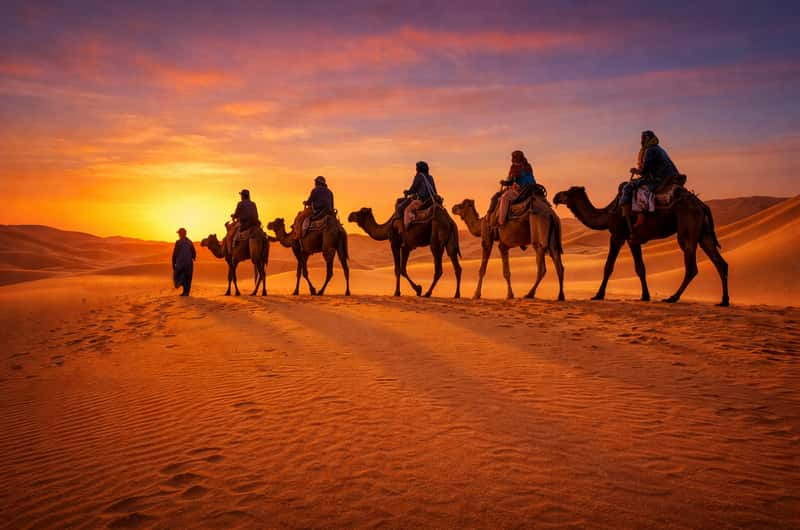
A camel ride in Merzouga is one of the most popular activities in the Moroccan Sahara. The experience allows travelers to cross the dunes while enjoying the changing colors of the desert landscape.
The timing of the camel ride can make a major difference. Late afternoon is popular because temperatures begin to decrease and the journey can coincide with sunset.
Early morning is another excellent option. The desert is often quieter, and the softer morning light creates beautiful conditions for photography.
During summer, avoiding the hottest part of the afternoon is particularly important. Therefore, sunrise and sunset camel rides can be more comfortable.
Best Time to Watch the Sahara Sunset
Watching the sunset over the Sahara is one of the most memorable experiences on a Morocco desert tour. As the sun moves toward the horizon, the dunes gradually change color.
The golden light creates beautiful shadows across the sand. Moreover, reaching a high dune before sunset provides a wide panoramic view of the surrounding landscape.
Although sunsets are beautiful throughout the year, spring and autumn can offer comfortable conditions for spending time outside while waiting for the sun to disappear.
Best Time to Watch the Sahara Sunrise
Sunrise is another essential experience in the Sahara. Early in the morning, the first rays of sunlight gradually illuminate the dunes.
The desert can feel particularly peaceful at this time. Therefore, travelers staying overnight in a Merzouga desert camp often wake early to watch the sunrise.
In addition to being a beautiful experience, early morning is generally cooler than the middle of the day. This makes it an excellent time for photography and quiet exploration.
Best Time to Stay in a Sahara Desert Camp
An overnight stay in a Sahara desert camp allows you to experience the desert after sunset. Instead of returning to a city or hotel, you spend the night surrounded by dunes.
Typically, the experience can include a traditional Moroccan dinner, mint tea, music, and time around a campfire. Afterwards, you can look up at the night sky away from the bright lights of major cities.
Spring and autumn can be particularly comfortable for this type of experience. Winter is also possible, although you should prepare for cold temperatures after dark.
Best Time for Sahara Desert Photography
The Sahara is a dream destination for landscape photography. The dunes, camel caravans, camps, and changing light create countless photographic opportunities.
However, the best light usually appears around sunrise and sunset. During these periods, the sun is lower in the sky, creating softer light and longer shadows.
As a result, photographers should consider waking early and staying outside during the late afternoon. These simple choices can produce more atmospheric photographs than shooting during the harsh midday light.
You can photograph:
- Erg Chebbi dunes
- Camel caravans
- Sahara desert camps
- Desert sunsets
- Desert sunrises
- Traditional villages
- Palm-filled valleys
- Moroccan landscapes
- Night skies
Best Time for a Sahara Desert Tour from Marrakech
Many travelers begin their desert journey in Marrakech. From there, a typical route can cross the High Atlas Mountains before continuing through Ait Ben Haddou, Ouarzazate, the Dades Valley, Todra Gorge, and finally Merzouga.
Because the journey involves several outdoor stops, choosing a comfortable season can improve the overall experience.
Spring and autumn are particularly attractive for travelers planning a Marrakech to Merzouga desert tour. Nevertheless, winter and summer remain possible with suitable planning.
Best Time for a Sahara Desert Tour from Fes
Fes is another major starting point for Morocco desert tours. Travelers can travel from Fes through the Middle Atlas Mountains before reaching the desert region.
A typical Fes to Merzouga desert tour can include stops in Ifrane, Azrou, Midelt, the Ziz Valley, Erfoud, and Rissani.
Because the route includes long drives and outdoor sightseeing, moderate weather can make the journey more comfortable. Spring and autumn are therefore popular periods for this itinerary.
How Many Days Do You Need in the Sahara?
For a first Sahara experience, two days and one night can be enough to enjoy the main highlights. This type of itinerary usually includes transportation to Merzouga, a camel trek, sunset, a desert camp, dinner, sunrise, and breakfast.
However, a longer itinerary allows you to explore more of southern Morocco. For example, you can combine Merzouga with the Dades Valley, Todra Gorge, Ouarzazate, Ait Ben Haddou, Marrakech, or Fes.
Therefore, the number of days you need depends on your overall Morocco itinerary. If the Sahara is the main focus, spending additional time in the region can provide a slower and more immersive experience.
What to Wear in the Sahara Desert
Choosing the right clothing is important regardless of when you visit Morocco’s Sahara. During warm periods, lightweight and breathable clothing can help you remain comfortable.
At the same time, temperatures can change quickly after sunset. Even during warmer seasons, bringing a light layer can be useful.
During winter, however, warm clothing becomes especially important. A jacket, sweater, and additional layers can help protect you from cold evenings and early mornings.
What Should You Pack?
Here are some useful items for a Sahara trip:
- Comfortable walking shoes
- Lightweight clothing
- Warm layers
- Sunglasses
- Sunscreen
- Hat or scarf
- Reusable water bottle
- Camera or smartphone
- Power bank
- Small backpack
- Warm jacket for winter
A scarf can also be useful because it provides protection from sunlight and wind.
Is the Sahara Desert Worth Visiting in Summer?
Yes, the Sahara can still be an unforgettable destination during summer. However, the heat requires more careful planning.
The main challenge is the high daytime temperature. Therefore, travelers should avoid spending unnecessary time outdoors during the hottest part of the day.
Instead, plan activities for early morning and late afternoon. A sunset camel ride, for example, can provide a memorable experience while avoiding the strongest afternoon heat.
If your travel dates are flexible, spring and autumn may offer more comfortable conditions. However, summer travelers can still enjoy the Sahara with proper preparation.
Is Winter a Good Time for a Sahara Desert Trip?
Winter can be an excellent choice for travelers who prefer cooler daytime conditions. The desert landscape remains spectacular, and outdoor exploration can be comfortable when the sun is shining.
The main consideration is nighttime temperature. After sunset, the desert can become very cold, particularly during December, January, and February.
Consequently, travelers planning an overnight Sahara desert camp should bring warm clothing. With the right preparation, winter can provide a peaceful and memorable desert experience.
Sahara Desert Weather: What Travelers Should Know
The Sahara has a dry desert climate with significant temperature differences between day and night. This means that travelers should prepare for changing conditions rather than expecting the same temperature throughout the day.
During summer, the biggest challenge is daytime heat. During winter, the main concern is nighttime cold. Spring and autumn generally provide a more balanced experience.
However, weather conditions can vary. Therefore, it is always useful to check the expected conditions shortly before your trip and adjust your packing accordingly.
Best Time for a Morocco Desert Tour with Family
Families planning a Morocco family tour may want to prioritize comfortable temperatures. Spring and autumn can be suitable because children can spend more time outdoors without the strongest summer heat.
A family-friendly desert itinerary can include camel rides, desert camps, scenic stops, and cultural experiences. Moreover, families can choose private transportation to make the journey more flexible.
During summer, families should pay particular attention to hydration and sun protection. During winter, warm clothing is important, especially for children spending the night in the desert.
Best Time for a Romantic Sahara Desert Experience
The Sahara can also be an unforgettable destination for couples. Watching the sunset together from the dunes, enjoying dinner at a desert camp, and looking at the stars can create a memorable experience.
Spring and autumn offer comfortable conditions for spending time outdoors. Couples can also choose a private desert tour for a more flexible itinerary.
For a romantic Morocco desert tour, consider combining the Sahara with Marrakech, Ait Ben Haddou, the Dades Valley, and other scenic destinations.
Best Time for a Luxury Sahara Desert Experience
A luxury Morocco desert tour can be enjoyed throughout the year. However, choosing a comfortable season can make it easier to enjoy outdoor activities around your accommodation.
Luxury desert camps can offer comfortable accommodation, private facilities, traditional meals, and additional services. Even so, seasonal temperatures still matter when you spend time outside.
Spring and autumn can therefore provide a comfortable balance between luxury camp life and desert exploration.
Sahara Desert Travel Tips
Before starting your desert adventure, a few practical tips can make the journey easier. First, stay hydrated and protect yourself from direct sunlight.
Second, choose comfortable clothing and footwear. Although the desert may look simple, walking across sand and rocky terrain can require suitable shoes.
Third, plan your activities according to the season. In summer, focus on mornings and evenings. In winter, prepare for cold nights.
Finally, leave enough time in your itinerary to enjoy the journey itself. The road to the Sahara is part of the experience, with mountains, valleys, kasbahs, villages, and changing landscapes along the way.
Frequently Asked Questions About the Best Time to Visit the Sahara Desert
What is the best time to visit the Sahara Desert in Morocco?
The most comfortable periods are generally spring and autumn, especially from March to May and September to November. These seasons can offer suitable conditions for camel rides, desert excursions, and overnight stays.
What is the best month to visit Merzouga?
April, May, October, and November are attractive months for many travelers because temperatures are generally more comfortable for outdoor activities. However, Merzouga can be visited throughout the year.
Is the Sahara too hot in July?
July is one of the hottest months in the Sahara. Outdoor activities should therefore be planned around sunrise and sunset whenever possible.
Can I visit the Sahara in December?
Yes. December can provide comfortable daytime conditions, but nights can be cold. Warm clothing is recommended for overnight stays.
When is the best time for a camel ride in Merzouga?
Late afternoon and early morning are popular times for camel rides. Late afternoon also allows travelers to experience sunset from the dunes.
What is the best time to stay in a desert camp?
Spring and autumn can provide comfortable conditions for spending the evening outdoors. Winter is also possible if you prepare for cold nights.
How cold is the Sahara at night?
Nighttime temperatures can drop significantly, especially during winter. The exact conditions vary by season, so warm layers are recommended.
What should I bring to the Sahara?
Bring comfortable shoes, sunscreen, sunglasses, a hat or scarf, water, lightweight clothing, and warm layers. A camera and power bank can also be useful.
Final Thoughts: Choosing the Best Time to Visit the Sahara Desert in Morocco
The best time to visit the Sahara Desert in Morocco ultimately depends on your travel preferences, schedule, and tolerance for heat or cold. Nevertheless, spring and autumn generally provide a comfortable balance for travelers who want to enjoy outdoor desert activities.
Spring brings warmer days without the strongest summer heat, while autumn offers increasingly pleasant temperatures after the summer season. Meanwhile, summer can be very hot but remains possible with careful planning, and winter offers cooler days with cold nights.
Whatever season you choose, the Moroccan Sahara offers an extraordinary combination of golden dunes, camel rides, traditional desert camps, Berber culture, spectacular sunsets, and peaceful landscapes.
Most importantly, do not focus only on reaching the dunes. The journey itself is part of the adventure. From Marrakech or Fes, you can discover mountains, valleys, kasbahs, palm groves, traditional villages, and historic sites before arriving in Merzouga.
With the right season, suitable clothing, and a well-planned itinerary, your Morocco desert tour can become one of the most memorable parts of your trip.